Pippi Longstocking on Gotland – The Story of the Strongest Girl in the World
Do you dream of getting to know Pippi Longstocking in real life? This guide tells you the story of Pippi Longstocking and gives you tips on how to visit her real Villa Villekulla in Kneippbyn outside Visby.
Many people associate Pippi Longstocking with Gotland, Villa Villekulla, and the classic films that were shot on the island. Even today, families can visit many of the locations from the story and follow in Pippi’s footsteps.
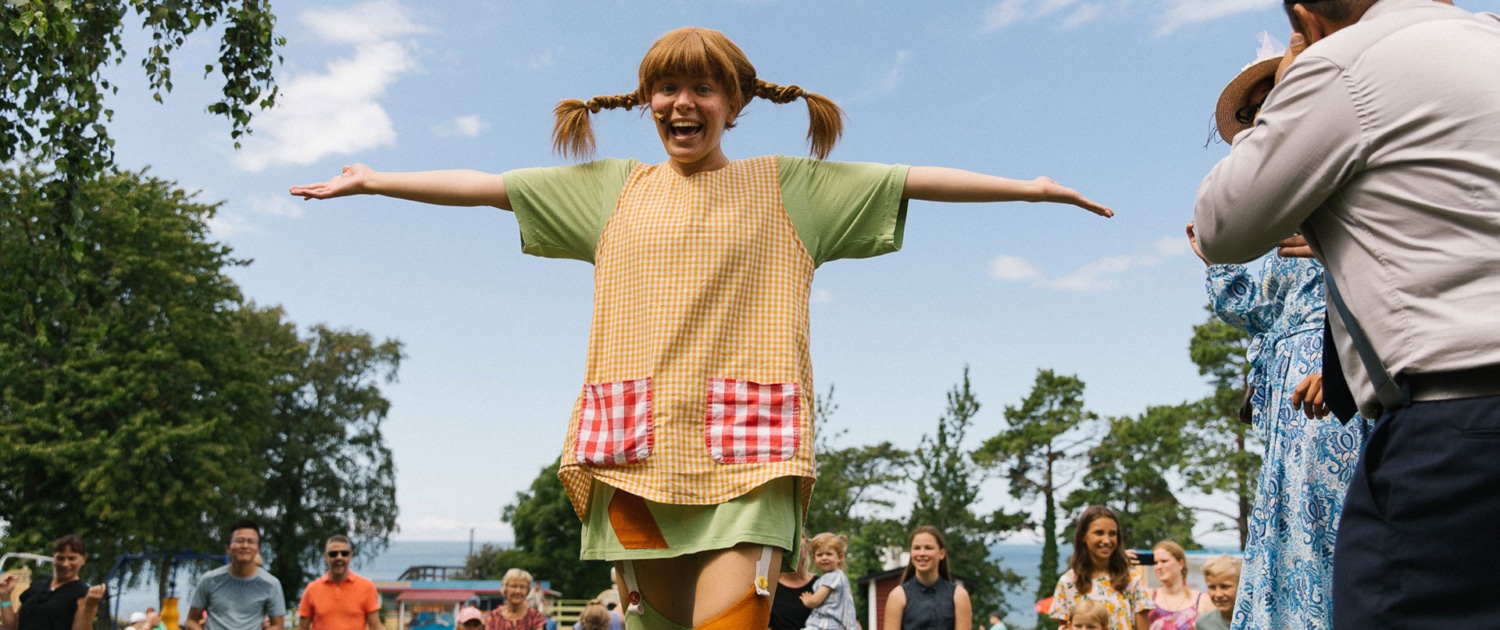
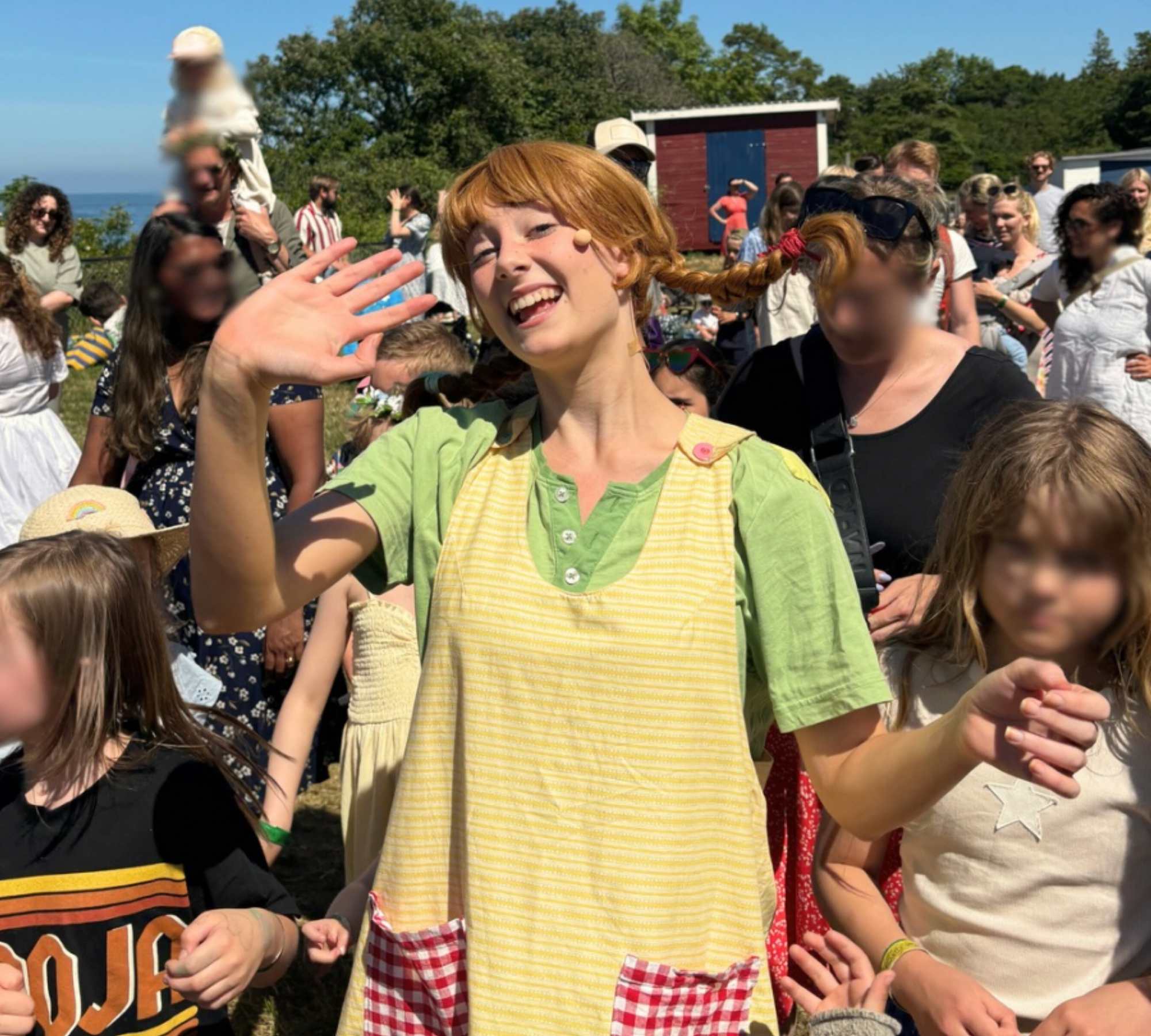
Red braids dancing in the wind, freckles sparkling in the sun, and a girl lifting her horse with one hand. Who doesn’t recognize Pippi Longstocking? Ever since Astrid Lindgren first told the story of this extraordinary girl, children all over the world have dreamed of meeting the strongest and most independent child in the world. At Kneippbyn on Gotland, you can meet Pippi Longstocking and experience her world up close.
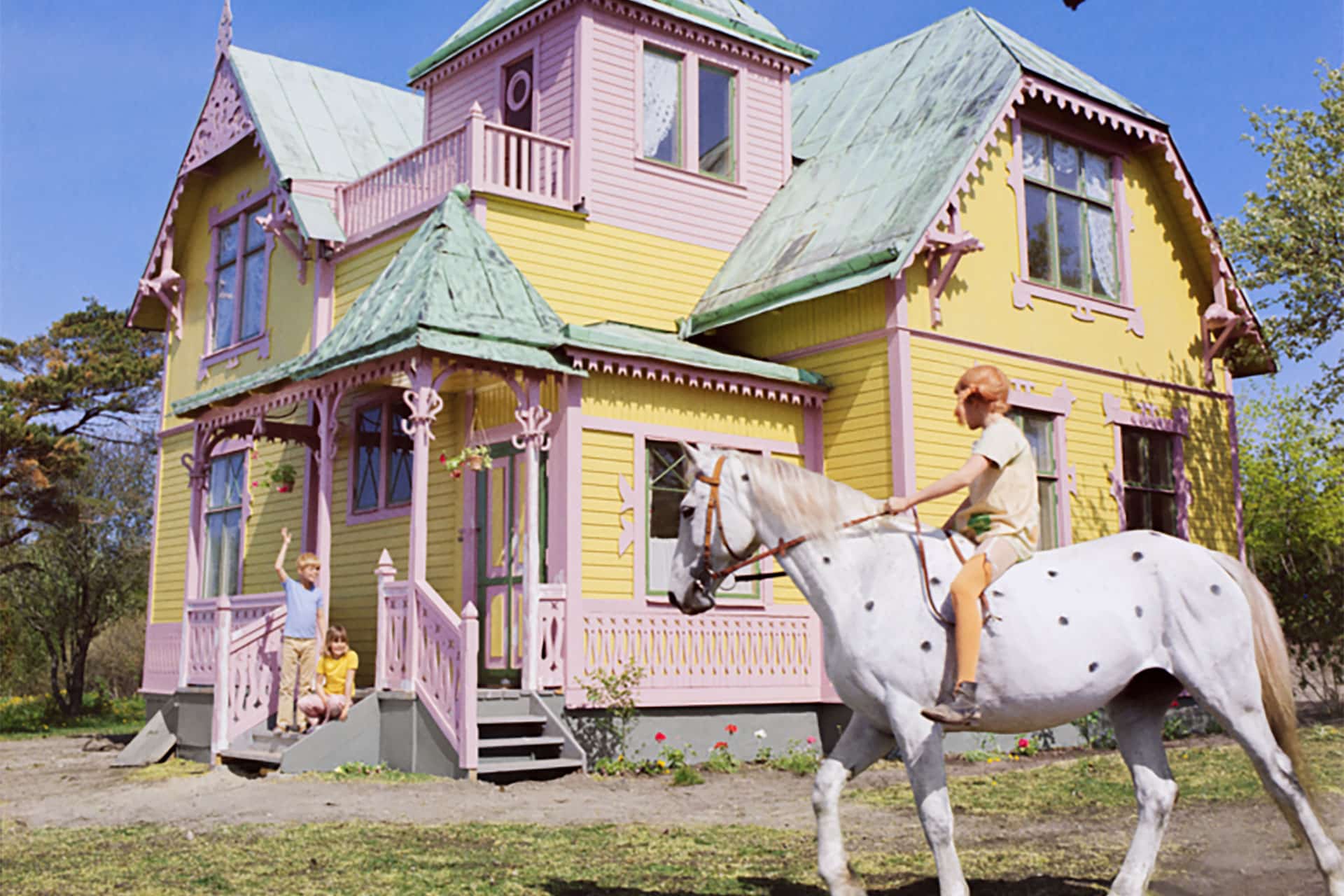
Here, in the heart of the Gotland countryside, stands Villa Villekulla, the actual house from the Pippi Longstocking movies. It’s not just a popular attraction, but a chance to step right into one of Sweden’s most beloved stories.
Who is Pippi Longstocking, the strongest child in the world?
Pippi is a nine-year-old girl who lives in Villa Villekulla with her spotted horse Little Old Man and her monkey Mr. Nilsson. With her red braids, freckled face, and mischievous smile, she is easy to recognize. But what really makes her unique is her incredible strength. Pippi is actually the strongest girl in the world.
She doesn't go to school, has no teacher to tell her what to do, and prefers to do as she pleases. According to Pippi, life should be lived to the fullest, especially when it comes to helping those you care about. "If someone needs to be rescued, then you just do it," she says, regardless of the time of day or how far away the person may be.
What makes her world so magical is that every adventure brings something new and leads wherever her imagination wants to go. And in the crooked, colourful house with the sugar tree in the garden, something unexpected is always waiting around the corner.
Her father, Captain Efraim Långstrump, is king of an island in the South Seas and often out at sea, while her mother is an angel in heaven. With a trunk full of gold coins, Pippi never worries about money. But despite her strength and wealth, she is above all warm, kind, and full of mischief. She loves nothing more than playing with her best friends Tommy and Annika, who live next door.
A timeless hero was born in Astrid Lindgren's world
Pippi is perhaps the most beloved character in Astrid Lindgren's stories. With her fearless personality, strength, and longing for freedom, she became a symbol of children's rights, imagination, and independence. At Kneippbyn, this world comes to life, and every visit to Villa Villekulla becomes a tribute to Lindgren's unique ability to speak to children in their own language.

Little Old Man and Mr. Nilsson, Pippi Longstocking's loyal friends
Pippi does not live entirely alone in Villa Villekulla. At her side are two very special friends, the horse Little Old Man and the monkey Mr. Nilsson.
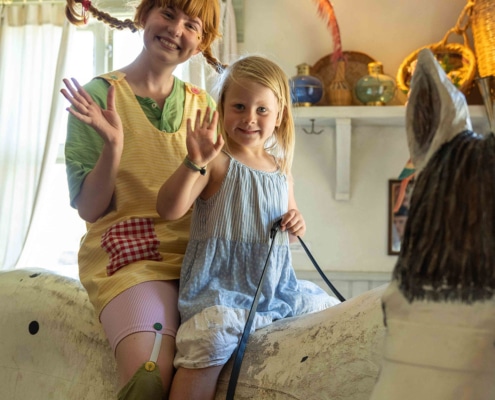
Little Old Man, the white horse with black spots, lives on the porch and is known for sometimes being lifted up by Pippi with one hand. This is clear proof that she really is the strongest girl in the world. He is calm, kind, and often accompanies her on adventures, both in the books and the films.
Mr. Nilsson, the little monkey in green pants and a yellow jacket, likes to sit on Pippi's shoulder and contributes both charm and mischief. Despite his size, he often plays an important role in many of Pippi's antics.
Little Old Man and Mr. Nilsson are also represented at Villa Villekulla in Kneippbyn. This makes the experience even more exciting for children, who get to see their favorite animals from the stories in real life.
Astrid Lindgren and the creation of Pippi Longstocking
The story of Pippi began in Astrid Lindgren's living room in 1941. Her daughter Karin was ill and asked her mother to tell her a story about someone called Pippi Longstocking, a name Karin had made up herself. Astrid began to tell the story, and from her imagination grew one of the world's most beloved children's book characters.
Three years later, Lindgren wrote down the story as a birthday present for Karin when she turned ten. But the road to publication was not straightforward. The publisher Albert Bonniers rejected it on the grounds that the book could be a bad influence. Fortunately, Lindgren submitted the manuscript to a writing competition at Rabén & Sjögren in 1945, where she won. The first book about Pippi Longstocking was published that same year.
Astrid Lindgren's idea was to create a character with power who never abused it. Pippi stands for freedom, kindness, and courage, and shows that children can think for themselves, help others, and follow their hearts. The first three books about Pippi were published between 1945 and 1948 and quickly became beloved throughout Sweden.

Dunder Karlsson and the classic film adventures with Pippi Longstocking
In the 1960s, director Olle Hellbom and Astrid Lindgren decided to turn the Pippi books into films. Inger Nilsson was chosen for the role of Pippi, aged just nine, the same age as Pippi herself in the stories. At her side, Pär Sundberg and Maria Persson played Tommy and Annika, and Margot Trooger became Miss Prysselius.
The films captured the sense of freedom, imagination, and mischief that made Pippi such a beloved character. Scenes where she lifts her horse, bakes gingerbread cookies directly on the floor, or tricks the clumsy thieves Dunder Karlsson and Blom have become classics that generations of children have grown up with. The films became an international success and continue to convey the magic that only the world of childhood can offer.
Pippi Longstocking on film – filming locations in Visby and on Gotland
When it was time to shoot the Pippi Longstocking films, Gotland was chosen as the location. The island's natural landscape, with its open fields, limestone cliffs, and charming houses, provided just the right atmosphere for creating Pippi's magical world. But the film crew needed more than just beautiful scenery; they also needed a very special house.
An advertisement was placed in Gotlands Tidningar with the question, "Do you have a house for Pippi Longstocking?" After much searching, the perfect house was found, an old caretaker's house outside Visby that exuded just the playfulness they were looking for.
To transform it into Villa Villekulla, the film crew built a porch, painted the shutters in different colors, and gave the house the quirky and cheerful character that Pippi herself has. The sugar tree was planted in the garden, and suddenly Gotland had its own Villa Villekulla.
Several other scenes were filmed at various locations around the island. Dramatic cliffs, green meadows, and small villages became the backdrop for Pippi's adventures. Even today, visitors can recognize the settings from the films when they explore Gotland.
Places in Pippi's Footsteps
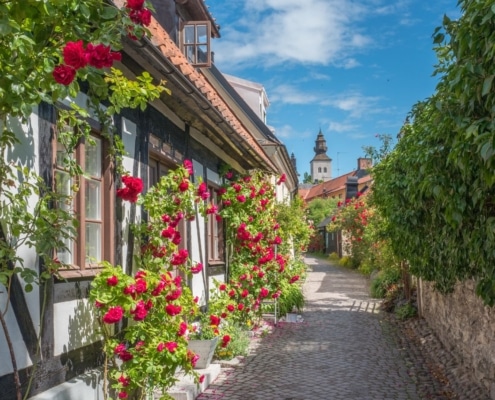
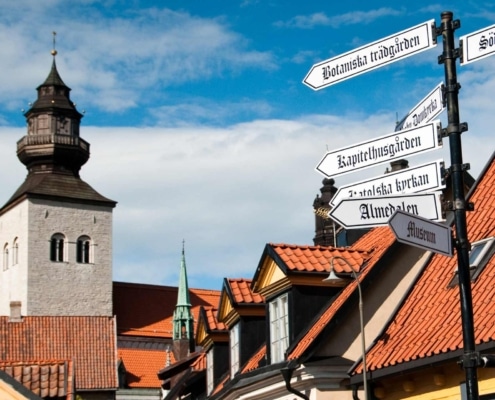
For those who want to follow in Pippi's footsteps, there are several filming locations to discover in Visby. Many scenes were filmed in the old town center, for example in Fiskargränd, where Pippi was once seen at the candy store, and on Sankt Hansgatan, where the clothing store from the films was located. The mighty ring wall at Östergravar can also be seen in the scenes where Pippi rides along the wall towards Brunnsporten.
Norra Murgatan appears when Pippi is out with her friends, and Uddens gränd is passed when Kling and Klang try to keep order in town. You can even visit the place where Villa Villekulla first stood, before the house was moved to Kneippbyn just outside Visby.
Several local organizers also offer guided tours in Visby "in Pippi's footsteps," where children can enjoy stories, fairy tales, and exciting games while discovering the settings of the films.
Step inside Villa Villekulla, Pippi Longstocking's home
When filming of the Pippi Longstocking movies was completed, Villa Villekulla remained in its original location outside Visby. However, in 1970, something quite extraordinary occurred. The house was moved in one piece all the way to Kneippbyn, which was then a health resort. Here, it would eventually become the centerpiece of a growing family park.
The move was a technical masterpiece. The old house was carefully lifted from its foundations and transported across the island to its new location by the sea. There, Villa Villekulla was given new foundations, a new lease of life, and a new role as a unique tourist attraction.
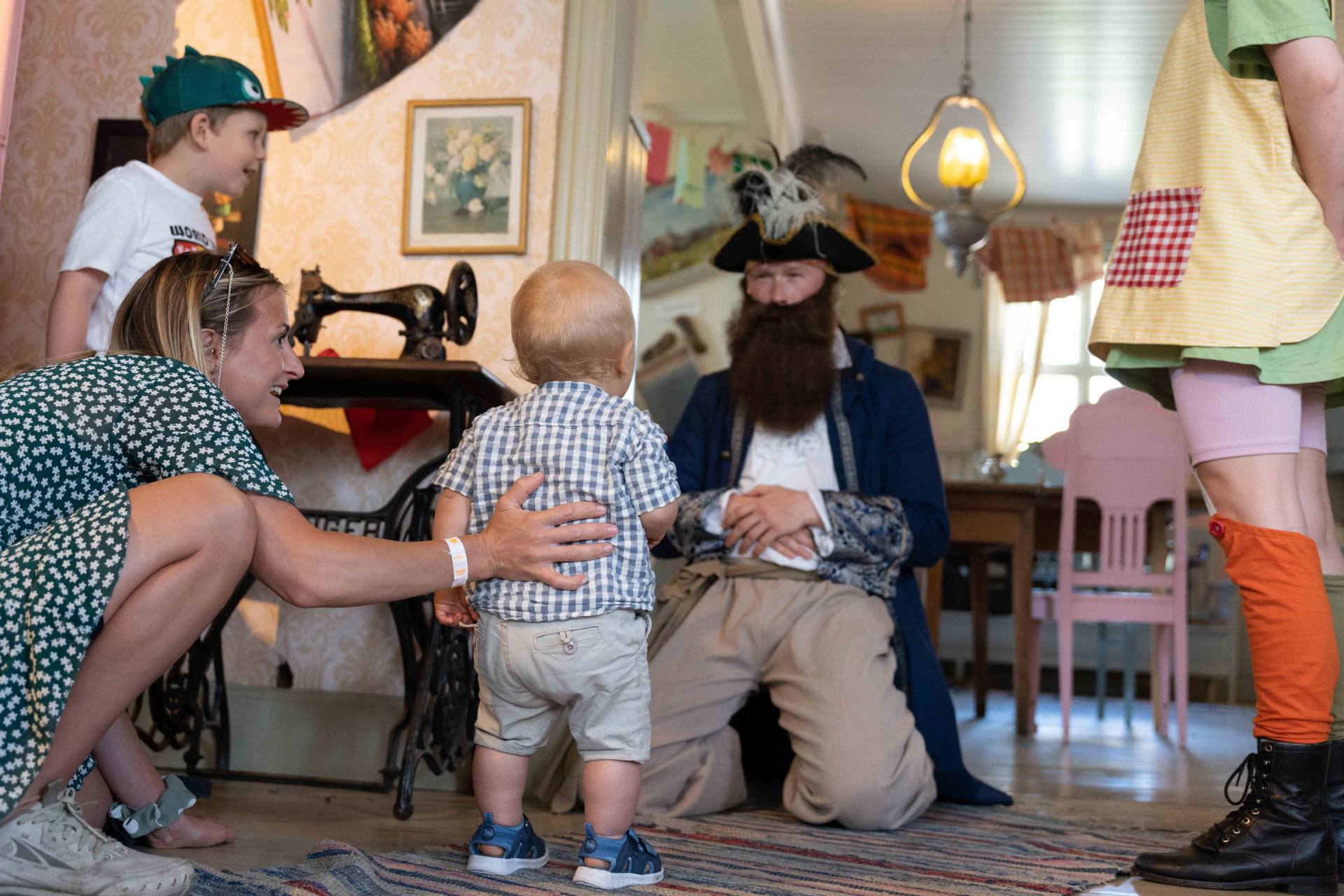
Today, visitors can step right into the house and experience Pippi's world just like in the movies. Each room has been carefully preserved and decorated with authentic props. The kitchen, living room, and Pippi's bedroom are ready to be explored, just as they looked when the cameras were rolling.
Experience the magical world of Pippi Longstocking for real
Walking around Villa Villekulla in Kneippbyn is like stepping straight into the books about Pippi Longstocking. Here, visitors can wander through each room and see where Pippi slept, played, and had her adventures. The sugar tree still stands in the garden, and many children enjoy tasting the sweet berries, just like in the story.
Next to the house is a small museum where you can see props from the films. There you will find Kling and Klang's classic Model T Ford, as well as the motorcycle used in several scenes. Kling drives the car, but it is his colleague with the slightly more resonant voice who often tries to take command.
Kneippbyn also offers several interactive activities for the whole family. Here, children can play without touching the water at Hoppetossa, sing along during song sessions, and listen to stories. There is something for both young and old.
The cultural significance of Pippi Longstocking
Today, Pippi Longstocking is much more than a character from a children's book. She has become a cultural icon symbolizing children's rights, independence, and the courage to be oneself. Through her adventures, she shows that children can think for themselves, solve problems, and take responsibility for their actions.
The stories about Pippi have been translated into many languages and reached readers all over the world. In several countries, she is seen as a symbol of fearlessness and creativity. Her famous quote, "I've never tried that before, so I'm sure I can do it," has inspired generations of children to dare to try new things.
In Sweden, Pippi has a special place in the hearts of both children and adults. She is associated with values such as equality, justice, and respect. Many also see her as an early feminist role model who showed that girls can be strong, free, and curious.
The fact that the stories about Pippi Longstocking continue to spread around the world shows how universal themes such as friendship, freedom, and adventure engage children regardless of their background. Her world is a place where anything is possible, and where the child's perspective is always at the center.
Villa Villekulla is moving in: plan your visit to Kneippbyn today
Villa Villekulla at Kneippbyn is open to visitors all year round. During the summer, the entire park is filled with activities, but even in winter you can book a tour to step inside the house and experience Pippi's world in peace and quiet.
For many, stepping into the house where Pippi once played is a powerful experience. Standing in her room, seeing the furniture, and looking out of the same windows creates a connection between childhood imagination and reality that is difficult to find anywhere else.
Many visitors say that it feels special to stand in the same environment where Pippi had her adventures. For children, the experience is often memorable. Seeing that her home really exists and being able to touch the same objects as in the films brings the stories to life in a way that only a real visit can.
Want to experience that magic for yourself? Villa Villekulla is located in Kneippbyn, just outside Visby on Gotland. Book your visit today and step right into Pippi's world, an adventure you will never forget!
Text: Ebba Ahlberg
 Select a date and a
 Add activities at Kneippbyn.
 Select date and